AGP Executive Report
Last update: 4 days agoIn the last 12 hours, coverage for Timor-Leste and the wider region leaned heavily toward public health, digital inclusion, and regional diplomacy. A major law-enforcement update reported an INTERPOL-coordinated “Operation Pangea XVIII” across 90 countries that seized 6.42 million doses of unapproved/counterfeit pharmaceuticals worth USD 15.5 million, with 269 arrests and disruption of about 5,700 criminal-linked online sites and bots. In parallel, Timor-Leste-specific conservation reporting warned that the critically endangered “Timor green pigeon” is close to disappearing, citing research based on more than 20 years of field data and suggesting only a few hundred birds may remain without urgent action. Health policy also featured in regional reporting: senators backed a total ban on vape products amid youth addiction fears, citing evidence of rising adolescent e-cigarette use and concerns about online access and age verification.
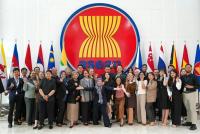
Digital transformation and governance were another dominant thread. One report says 450 remote Timor-Leste villages (sucos) have been connected via Starlink, framed as a government reform and digital inclusion push that is expected to expand access to services such as education and healthcare. Trade and diplomacy also appeared in the news cycle: the ASEAN-Korea Centre opened a rotating “2026 ASEAN Panorama” trade exhibition in Seoul, with Timor-Leste included via a planned separate showcase during the run. Meanwhile, AP coverage said ASEAN leaders plan to issue a contingency plan tied to the Middle East war’s spillover effects—emphasizing international law, sovereignty, freedom of navigation, and crisis planning that includes energy shortages.
Beyond the most recent 12 hours, older items provide continuity on regional priorities and Timor-Leste’s growing integration. ASEAN ministers adopted a Bali Declaration on youth and sports governance, while Vietnam took over ASEAN chairmanship in Copenhagen and Vietnam also assumed an ASEAN committee chair role—both pointing to ongoing institutional coordination. On energy and resilience, multiple older reports discussed the Middle East-driven oil shock and the need for regional cooperation and contingency planning, including finance chiefs warning against market volatility and pledging stronger regional ties. For Timor-Leste specifically, an earlier piece on development policy highlighted the role of data analytics in targeting interventions (including research work on Timor-Leste child stunting), and a government press release described Council of Ministers decisions authorizing spending for irrigation (Laueli project) and a grant agreement for energy-sector participation cooperation.
Overall, the strongest “major event” signals in this 7-day window are the INTERPOL pharmaceutical crackdown and the Timor-Leste digital connectivity rollout—both supported by detailed, concrete reporting. Conservation urgency around the Timor green pigeon is also prominent, though it is framed as research findings and a warning rather than an immediate policy action. By contrast, several ASEAN headlines appear more like routine diplomatic and institutional updates, with the Middle East-related contingency planning standing out as the clearest cross-border policy response theme.
Note: AI summary from news headlines; neutral sources weighted more to help reduce bias in the result.